At the Ādaži military base, approximately thirty kilometers from Riga, the flags of the 14 nations comprising the NATO multinational brigade flutter under a frequently overcast sky, symbolizing transatlantic unity amid geopolitical tensions in Eastern Europe. Since 2017, Canada has served as the framework nation for this brigade under Operation REASSURANCE, a mission aimed at bolstering deterrence against Russia. With around 2,000 troops deployed, this represents the Canadian Armed Forces’ (CAF) most significant overseas commitment. However, despite the professionalism of the troops and the strategic importance of their mission, persistent supply chain issues expose operational inefficiencies within the CAF, highlighting tensions between strategic ambitions and logistical realities.
Strategic Leadership at the Heart of NATO
Operation REASSURANCE, launched in response to Russia’s 2014 reunification of Crimea, positions Canada as a pivotal player in European security. The multinational brigade in Latvia, led by Canada, integrates mechanized infantry, artillery, Leopard 2 tanks, and electronic warfare units, with contributions from nations such as Italy, Poland, Spain, and, more recently, Sweden. In August 2025, Prime Minister Mark Carney reaffirmed Canada’s commitment by announcing the mission’s extension until 2029 during a visit to Ādaži. This decision underscores Ottawa’s emphasis on collective deterrence in a context of heightened tensions with Russia.
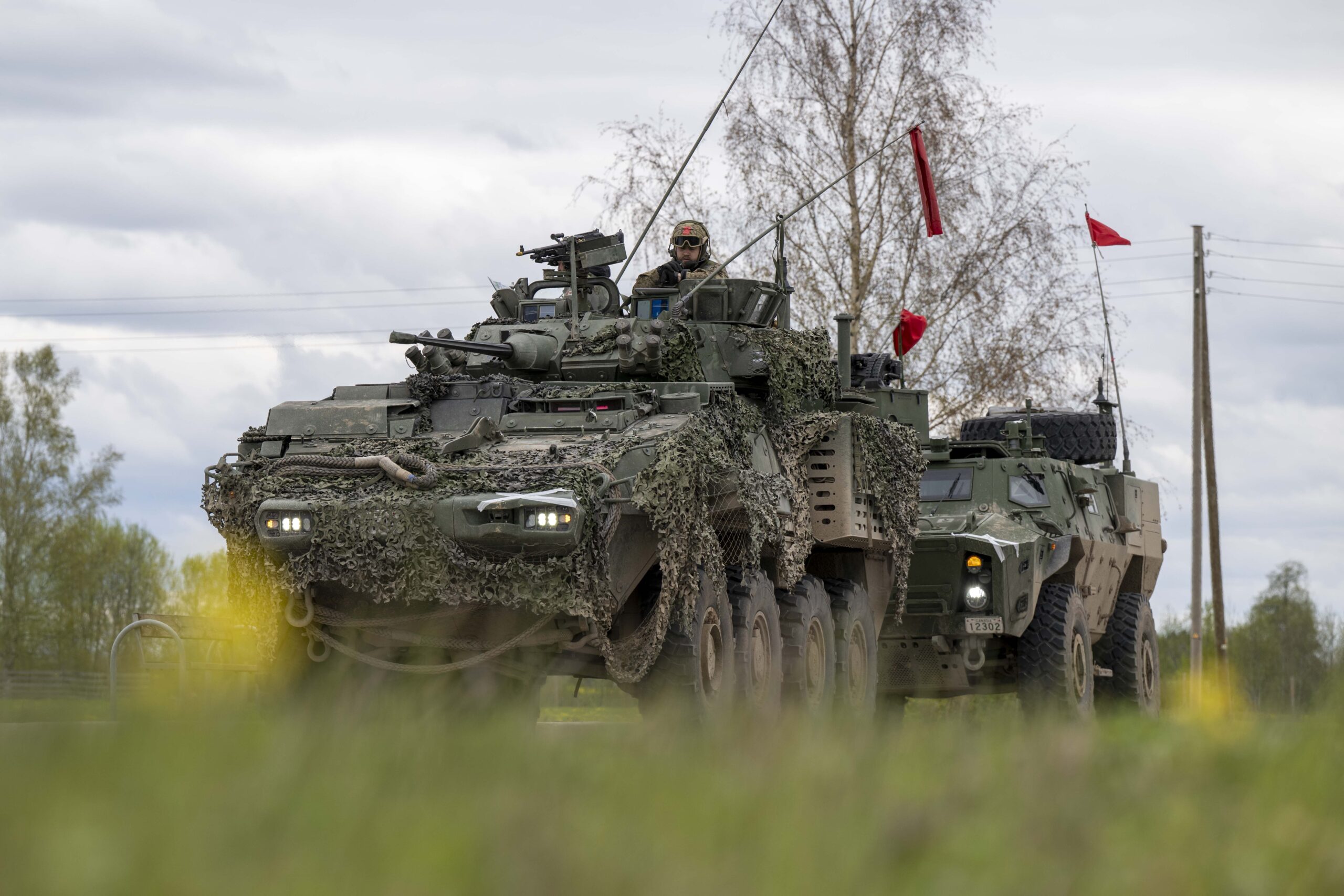
The brigade serves as a strategic “tripwire,” designed to deter aggression by demonstrating the speed and coordination of allied forces. With approximately 10,000 troops in total, including a significant Canadian contingent, the mission embodies a robust commitment to NATO’s principles. The CAF has also invested in modernizing its equipment, including Leopard 2 tanks and light armored vehicles tailored for Eastern European conditions. Yet, these efforts are undermined by logistical challenges that compromise the mission’s full effectiveness.
Persistent Logistical Challenges
Recent reports, including internal documents obtained by CBC News, highlight critical shortages of spare parts, resulting in a high rate of vehicles out of service (VOR). Leopard 2 tanks, vital to the brigade’s combat capability, are particularly affected, alongside other armored vehicles and howitzers. These issues stem from complex supply chains, where parts are often shipped from Canada to Europe, even when local alternatives are available. This system, plagued by prolonged delays and bureaucratic inefficiencies, limits the operational availability of equipment.
Another challenge lies in troop training. Due to insufficient resources in Canada, specialized training for operations in Latvia is often conducted on-site, reducing time for unit preparation and cohesion. These “compressed training” programs fall short of the rigorous standards the CAF aims to uphold, reflecting a lack of long-term investment in logistical and training infrastructure.
Undeniable Professionalism, Yet Hindered
Despite these obstacles, the professionalism of Canadian troops remains unwavering. Deployed in demanding conditions at Ādaži, far from their families, they operate in an environment where the threat of conflict, though remote, is ever-present. Their ability to coordinate a multinational brigade, integrate forces from diverse cultures and languages, and maintain an operational posture reflects dedication and competence that command respect. Regular exercises, such as Operation IRON WOLF, demonstrate the brigade’s capacity to respond swiftly to complex scenarios, even with limited resources.
However, supply chain issues cast a shadow over these achievements. Shortages of spare parts and logistical delays are not new for the CAF, which has historically grappled with constrained budgets and competing priorities. These challenges are particularly evident in a large-scale deployment like Latvia, where reliance on international supply chains amplifies structural weaknesses. As Canada seeks to strengthen its NATO presence, these issues underscore the need for logistical reform and increased investment in support capabilities.
Is Canadian Leadership Still Credible?
Persistent logistical challenges raise questions about Canada’s credibility in maintaining its leadership role within the multinational brigade. As troops on the ground face significant equipment shortages, rendering their tasks exceptionally difficult, Canada’s ability to project a reliable deterrent force is tested. Reports indicate that these critical shortages affect not only mobility and combat readiness but also allies’ confidence in the mission’s overall coordination.
In a context where NATO relies on the speed and resilience of its members, delays in supply chains—partly attributed to a decade of budget cuts—could erode perceptions of Canada as a dependable partner. During his recent visit, Prime Minister Carney promised additional troops and supplies, implicitly acknowledging these weaknesses. Yet, chronic issues, as documented by internal sources, suggest that structural reforms are necessary to fully restore credibility. Soldiers, grappling with immobilized vehicles and improvised training, embody the human toll of these shortcomings, relying on ingenuity to compensate but at the cost of increased effort and accumulated fatigue. Without swift investments, Canada’s leadership risks appearing more symbolic than substantive, potentially weakening collective deterrence against regional threats.
The Resilience of Canadian Troops
Canada’s leadership in Latvia remains a symbol of its commitment to collective security, but it cannot reach its full potential without robust logistics. The current challenges do not diminish the value of the Canadian troops’ efforts, but they call for reflection on how Canada manages its overseas military resources. Solutions such as partnerships with European suppliers, investments in local maintenance capabilities, and improved training planning could mitigate these issues.
At Ādaži, Canadian soldiers continue to wear their uniforms with pride, aware of their role in a mission of immense significance. However, for their dedication to translate into maximum operational effectiveness, Canada must address its logistical shortcomings. In a world where speed and reliability are critical, the resilience of the multinational brigade depends as much on spare parts as on the courage of those who serve within it.